

When it comes to home improvement projects, three words often get thrown around interchangeably: refurbishment, renovation, and refurnishing. While they sound similar, each has a distinct meaning and purpose. Understanding the difference can help you choose the right approach for your property — whether you’re upgrading your home, preparing an investment property for resale, or simply giving your space a fresh look.
In this article, we’ll break down refurbishment vs renovation vs refurnishing, explore their differences, and help you decide which option is best for your needs.
What is Refurbishment?
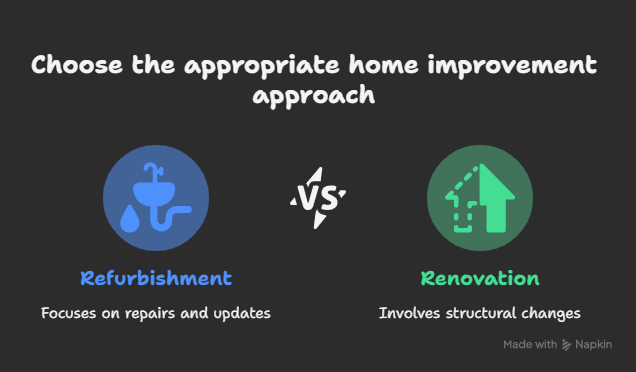
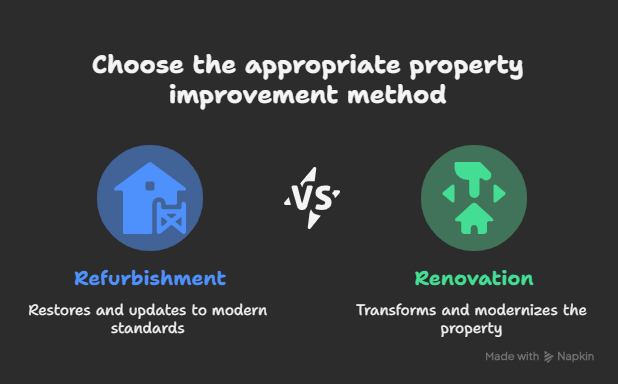
Refurbishment refers to the process of restoring or improving an existing building to make it look new again. It’s often used for properties that have aged, suffered wear and tear, or need updates to meet modern standards.
Key Features of Refurbishment:
- Restoration of old features: Bringing back the charm of existing structures (e.g., repairing timber floors or restoring brickwork).
- Cosmetic improvements: Painting walls, polishing fixtures, repairing damaged surfaces.
- Modern upgrades: Updating electricals, plumbing, or heating systems to comply with current safety codes.
- Preservation of character: Unlike renovation, refurbishment usually keeps the original design intact.
👉 Example: Refurbishing an old apartment block may involve repairing the façade, updating the lobby, and ensuring plumbing and wiring are safe — without drastically altering the layout.
What is Renovation?
Renovation goes one step further. It involves making significant changes to improve functionality, layout, or design. While refurbishment is about restoration, renovation is about transformation.
Key Features of Renovation:
- Structural changes: Altering layouts by knocking down walls, adding extensions, or reconfiguring spaces.
- Upgrading finishes: Installing new flooring, tiles, or cabinets.
- Energy efficiency improvements: Adding insulation, double-glazed windows, or solar panels.
- Blending modern and traditional: Renovations often combine the old charm of a property with new, modern conveniences.
👉 Example: Renovating a kitchen could mean removing old cabinets, changing the layout, adding a breakfast bar, installing new appliances, and upgrading plumbing and electrical systems.
What is Refurnishing
Refurnishing is the simplest and least invasive option. It focuses on replacing or updating the furniture and décor of a space rather than making structural changes.
Key Features of Refurnishing:
- New furniture: Buying new sofas, dining sets, or bedroom furniture.
- Interior styling: Adding rugs, curtains, wall art, and decorative pieces.
- Non-structural improvements: No changes to walls, floors, or plumbing.
- Quick makeover: Provides an instant uplift without major construction work.
👉 Example: Refurnishing a living room could mean swapping out old couches for a modern sectional, adding a coffee table, upgrading lighting, and introducing indoor plants.
Refurbishment vs Renovation vs Refurnishing: Key Differences
To make it clearer, let’s compare the three side by side:
| Feature | Refurbishment | Renovation | Refurnishing |
| Definition | Restoring and improving an existing property | Making structural or design changes | Replacing furniture and décor |
| Scope of Work | Medium – surface-level and functional updates | High – structural, design, and layout changes | Low – non-structural, aesthetic updates |
| Timeframe | Weeks to months | Months to a year (depending on scope) | Days to weeks |
| Cost | Moderate | High | Low to moderate |
| Purpose | To restore and update | To modernise and transform | To refresh look and feel |
| Example | Repainting, repairing plumbing, restoring floors | Kitchen remodel, bathroom upgrade, house extension | Buying new furniture, updating décor |
When Should You Choose Refurbishment?
Choose refurbishment when:
- You own an older property that needs to meet safety or building standards.
- You want to preserve historical or original features.
- Your property requires updates due to wear and tear, but you don’t want to change its structure.
👉 Ideal for heritage homes, rental properties, or offices needing fresh appeal without a full remodel.
When Should You Choose Renovation?
Choose renovation when:
- Your home no longer meets your lifestyle needs (e.g., needing an open-plan kitchen).
- You want to add value before selling.
- You’re looking to drastically modernise and improve the property’s functionality.
👉 Renovations are best for growing families, property investors, or homeowners planning a long-term stay.
When Should You Choose Refurnishing?
Choose refurnishing when:
- You’re working with a limited budget.
- You want quick results without construction work.
- You simply want to update the style or theme of a room.
👉 Refurnishing works best for rental makeovers, Airbnb styling, or seasonal refreshes.
Cost Considerations
- Refurbishment: Typically moderate in cost, depending on the property’s condition. A full refurbishment of a standard 3-bedroom home in Australia can cost between $20,000 – $60,000.
- Renovation: The most expensive option, especially with structural changes. A kitchen renovation alone can cost $25,000 – $50,000, while whole-house renovations can exceed $150,000.
- Refurnishing: Budget-friendly, depending on furniture choices. Refurnishing a living room may cost as little as $5,000 – $15,000.
Which Option Adds More Value to Property?
- Refurbishment: Adds value by restoring quality and ensuring safety standards. Good for older properties.
- Renovation: Delivers the highest return on investment (ROI) if done correctly. Kitchens and bathrooms are key renovation areas that attract buyers.
- Refurnishing: While it won’t increase structural value, it can improve buyer perception, especially for staging homes before sale.
Final Thoughts
When comparing refurbishment vs renovation vs refurnishing, the main difference lies in scope, cost, and purpose:
- Refurbishment is about restoring and repairing.
- Renovation is about upgrading and transforming.
- Refurnishing is about refreshing the look and feel.
Whether you’re giving an old property new life, transforming your home with modern updates, or simply changing the furniture, the choice depends on your budget, timeline, and goals.
If you’re unsure which path to take, consulting with a professional builder or designer can help you assess your property’s condition and create a tailored plan.
At Renovation Master, we help homeowners across Australia with tailored solutions for refurbishment, renovation, and refurnishing projects. Our team ensures every project adds comfort, functionality, and value to your property.